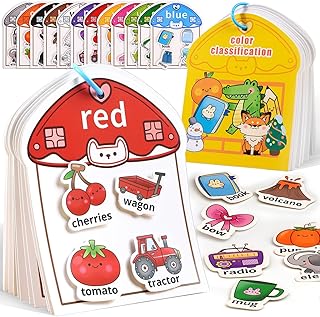

Did you know that by the age of five, a child’s brain has already reached 90% of its adult size? It is a staggering statistic that often sends well-meaning parents into a spiral of “curriculum paralysis.” You want to make the most of these formative years, but one look at a search result for “best homeschool curriculum” reveals a mountain of workbooks, digital platforms, and expensive kits that promise the world. It’s enough to make any smart parent want to close their laptop and hide under the covers.
This guide is designed to cut through the noise. We are going to look at how to identify your child’s unique learning style, the difference between rigid and flexible frameworks, and why a Montessori curriculum for children is often the “Goldilocks” solution for early learners. By the end of this post, you’ll have a clear roadmap for choosing curriculum for a child that fits your family’s lifestyle without sacrificing academic depth.
TL;DR: How to Choose Without the Headache
To find the right fit, prioritize your child’s natural interests and developmental stage over “grade-level” expectations. A high-quality early childhood education curriculum should be hands-on, flexible, and focused on fostering independence. For most families, a hybrid approach that uses structured Montessori principles like those found at montessori earlylearningcurriculums offers the best balance of freedom and foundational skill-building.
The Curriculum Landscape: Understanding Your Options
When we talk about a curriculum for kids, we aren’t just talking about a stack of math worksheets. A curriculum is essentially a “path of run”, a planned sequence of experiences that lead to learning. In the early years, this path can look very different depending on the philosophy you choose.
Traditional curricula often mirror the “factory model” of education: sit down, listen, repeat, and test. While this works for some, many parents find that it stifles the natural curiosity of a toddler or local preschooler. On the other end of the spectrum, you have “unschooling,” which is entirely child-led with zero formal structure. The sweet spot for most parents lies somewhere in the middle: a child learning curriculum guide that provides a framework while allowing the child to explore at their own pace.
Example: Imagine teaching a child about botany. A traditional curriculum might have them color a picture of a flower. A child-led approach might wait until the child asks about a flower. A Montessori approach provides the child with a real flower, a magnifying glass, and a set of nomenclature cards to identify the parts, bridging the gap between play and formal study.
Takeaway: Don’t buy a box of books just because it’s a bestseller. Look for a philosophy that aligns with how you want your daily life to feel.
Why a Montessori Curriculum for Children is Different
If you have been researching the best homeschool curriculum, you’ve likely seen the word “Montessori” everywhere. It isn’t just a buzzword; it’s a century-old method based on scientific observation. The core idea is that children have an “absorbent mind” and are naturally driven to learn if given the right environment.
A Montessori curriculum for children focuses on five key areas: Practical Life, Sensory, Language, Math, and Culture. Unlike traditional methods that treat subjects as isolated silos, Montessori integrates them. Pouring water (Practical Life) builds the hand-eye coordination needed for writing (Language). Sorting beads (Sensory) builds the foundation for the decimal system (Math).
At Montessori early learning curriculums, the focus is on making this high-level philosophy accessible for the modern home. You don’t need a PhD in education to implement these ideas; you just need a well-organized guide that tells you what to introduce and when. This takes the guesswork out of early childhood education curriculum planning.
Takeaway: Montessori is about “following the child.” If your child is obsessed with bugs, you use that interest to teach counting, drawing, and biology simultaneously.
Is Homeschooling Right for You? Finding the Best Homeschool Curriculum
The rise of remote work and a desire for more family time has led to a 200% increase in homeschooling in some regions over the last few years. But the biggest fear parents have is: “Am I going to mess them up?”
The best homeschool curriculum isn’t the one with the most bells and whistles; it’s the one you can actually stick to. Consistency beats intensity every single time. When choosing a curriculum for a child in a home setting, consider your “teacher personality.” Do you want a “scripted” curriculum that tells you exactly what to say? Or do you want a “resource-based” curriculum that gives you ideas you can adapt?
For early learners (ages 2–6), avoid curricula that require more than 20–30 minutes of “table time.” At this age, movement is learning. A curriculum for kids should involve baking, gardening, block-building, and reading aloud. If the curriculum feels like a chore for you, it will definitely feel like a chore for them.
Takeaway: Choose a curriculum that fits your schedule. If you only have 15 minutes a day for “formal” lessons, find a program designed for short, impactful bursts of learning.
A Step-by-Step Guide to Choosing Curriculum for a Child
Ready to make a decision? Follow these four steps to narrow down your search for the perfect child learning curriculum guide.
- Observe Your Child: Spend a week watching how they play. Do they prefer building (spatial/logical)? Do they talk non-stop (verbal/linguistic)? Do they need to touch everything (kinesthetic)?
- Define Your Goals: Are you looking for a full academic replacement, or just a way to supplement their time at home? If you want a holistic approach, an early childhood education curriculum that includes social-emotional learning is vital.
- Check the “Open-and-Go” Factor: Look at samples. If you need to spend three hours prepping materials every Sunday night, will you actually do it? This is why digital or pre-planned Montessori curriculum for children resources are so popular they do the heavy lifting for you.
- Budget Wisely: You can spend $50 or $5,000. Remember that for young children, the most expensive curriculum isn’t always the best. Sometimes, a well-thought-out guide and some basic household items are more effective than a room full of plastic toys.
Example: A parent might realize their child loves water play. Instead of a standard workbook, they choose a curriculum that uses “water pouring” as a way to teach volume and patience classic Montessori style.
Takeaway: Your child’s personality is the best compass you have. Trust your gut over the Instagram ads.
The Essentials of a Strong Early Childhood Education Curriculum
Regardless of the brand or philosophy you choose, any early childhood education curriculum worth its salt should cover these three “non-negotiables”:
- Sensory Integration: Young children learn through their five senses. If a curriculum is 100% digital or paper-based, it’s missing the mark for brain development.
- Practical Life Skills: Learning to zip a coat, peel a banana, or sweep the floor builds more than just independence; it builds “executive function” the brain’s ability to plan and execute tasks.
- Language Richness: It should go beyond the ABCs. It should include poetry, storytelling, and high-level vocabulary. Children are capable of understanding complex words if they are introduced in context.
This is where Montessori learning curricula excels. They provide a child learning curriculum guide that treats the child as a capable human being. By focusing on real-world skills and sensory exploration, you aren’t just teaching them “subjects”; you are teaching them how to learn.
Takeaway: If the curriculum doesn’t encourage the child to get their hands dirty or try things for themselves, keep looking.
Key Takeaways for Confused Parents
- Focus on the “Whole Child”: Academic skills are important, but emotional intelligence and physical coordination are the foundation they sit on.
- Flexibility is King: The best homeschool curriculum is the one that allows you to pivot when your child has a “lightbulb moment” or needs extra time on a concept.
- Montessori Works: A Montessori curriculum for children is specifically designed to follow the natural developmental windows (sensitive periods) of a child’s life.
- Start Small: You don’t need to buy a 12-year program today. Focus on the next six months.
Conclusion: Your Next Move
Choosing the right curriculum for kids doesn’t have to be a source of stress. Remember, you are your child’s first and best teacher, regardless of which books are on your shelf. The goal of an early childhood education curriculum isn’t to turn your living room into a high-pressure classroom, but to provide a spark that ignites your child’s natural desire to discover the world.
Frequently Asked Questions
What is the best curriculum for my child?
The best curriculum matches your child’s learning style, interests, and pace while building strong foundational skills.
At what age should I start a curriculum?
You can start play-based learning at ages 2–3, while formal academics usually begin around age 6.
Is Montessori curriculum good for all children?
Yes, Montessori works well for most children because it focuses on hands-on learning and independence.
Can I change curriculum if it doesn’t work?
Yes, you can switch anytime if your child is not engaged or benefiting from the current curriculum.
How much time should kids spend learning daily?
Young children need only 20–30 minutes of structured learning plus play-based activities.
Do I need expensive curriculum materials?
No, simple tools and well-designed guides are often more effective than expensive kits.
Can parents teach curriculum at home successfully?
Yes, with the right guidance and resources, parents can easily support their child’s learning at home.