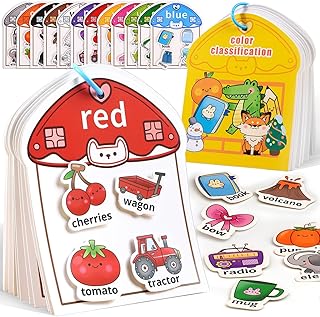

Every toy your child reaches for is a learning opportunity – but not every toy is built equally. Discover the authentic Montessori materials that actually develop the skills children carry for life.
Most parents assume “educational toy” means colorful plastic with flashing lights. Montessori disagrees – and decades of early childhood education research backs it up. The right authentic Montessori materials don’t entertain children; they engage them, building independence, focus, and problem-solving from the ground up.
Whether you’re setting up a home learning environment or exploring Montessori preschool education for your child, these 10 tools belong on your shortlist.
What Makes a Toy Truly “Montessori”?
Before the list, a quick filter – authentic Montessori materials are self-correcting, open-ended, made from natural materials, and sized for little hands. They invite repetition – because children learn through doing, not watching.
Top 10 Authentic Montessori Materials for Early Learners
1. Pink Tower (Sensorial Development)
Ten pink wooden cubes in graduated sizes teach spatial reasoning and visual discrimination. Children build, rebuild, and self-correct – no instructions needed. A cornerstone of Montessori educational materials for ages 2.5 – 6.
2. Knobbed Cylinders
These wooden blocks with varying heights and diameters refine the pincer grip (pre-writing prep) while sharpening size discrimination. One of the most beloved tools in Montessori preschool education classrooms worldwide.
3. Sandpaper Letters
Tactile letter cards let children feel the shape of each letter while hearing its phonetic sound. This multi-sensory approach accelerates literacy – a non-negotiable in early childhood education.
4. Golden Bead Material (Math)
Introduces ones, tens, hundreds, and thousands through physical beads children can hold and count. Abstract math becomes concrete – exactly how authentic Montessori materials are designed to work.
5. Moveable Alphabet
Wooden letters children arrange into words before they can write. Removes the barrier of fine motor skill from creative expression. Look for this in any quality Montessori preschool in San Jose or beyond.
6. Practical Life Dressing Frames
Buttons, zippers, snaps, buckles – each frame isolates one real-world skill. Builds independence, hand-eye coordination, and concentration in toddlers aged 2 – 4.
7. Trinomial Cube
A 3D geometric puzzle children solve through spatial logic, not instruction. It looks complex; children solve it with joyful persistence. Classic Montessori educational material for ages 4+.
8. Continent Globe & Maps
Textured globes and color-coded puzzle maps introduce global geography through touch. Sparks curiosity about the wider world – foundational in Montessori preschool education curricula.
9. Montessori Number Rods
Ten rods in graduated lengths teach counting, addition, and subtraction through physical comparison. Bridges sensorial and mathematical learning beautifully.
10. Stamp Game
A hands-on tool for four-operation arithmetic – addition, subtraction, multiplication, and division – using color-coded wooden stamps. Bridges concrete and abstract mathematical thinking for children aged 5–7.
How to Choose the Right Authentic Montessori Materials
Not all products labeled “Montessori” live up to the name. When shopping, look for:
- Natural materials (wood over plastic)
- Single-purpose design (one concept per material)
- Self-correcting built in (child finds the error, not the adult)
- Age-appropriate challenge (slightly ahead of current ability)
If your child attends a Montessori preschool in San Jose, ask educators which specific materials they use – then mirror them at home for maximum continuity.
Frequently Asked Questions
Q1: What age should children start using authentic Montessori materials? Most authentic Montessori materials are designed for ages 2.5–6, though practical life tools like dressing frames can begin as early as 18 months. The key is matching the material to the child’s developmental window, not their age in years.
Q2: Are Montessori toys worth the higher price? Quality Montessori educational materials are built to last years – often passing through siblings. Compared to disposable plastic toys, the cost-per-use is significantly lower, and the developmental return is far higher.
Q3: Can I use Montessori materials at home without enrolling in a Montessori preschool? Absolutely. Many families combine home Montessori materials with a Montessori preschool education setting. Even a small “Montessori corner” at home with 3–4 well-chosen materials creates meaningful learning time daily.
Q4: How is Montessori different from traditional early childhood education? Traditional early childhood education is often adult-led with structured lessons. Montessori is child-led – children choose their work, set their pace, and learn through hands-on materials rather than screens or worksheets.
Q5: What should I look for in a Montessori preschool in San Jose? Look for AMI or AMS accreditation, trained Montessori guides (not just “teachers”), mixed-age classrooms (3–6 year range), and a prepared environment stocked with authentic Montessori materials – not generic craft supplies.
Final Thought
The best toy isn’t the most expensive or the most entertaining – it’s the one that meets your child where they are and invites them to grow. Authentic Montessori materials do exactly that, one carefully designed piece at a time.