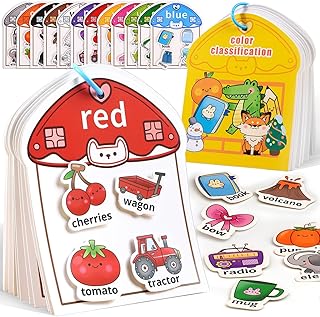

Parents exploring Montessori education often ask, “Why do Montessori schools use so many hands-on materials instead of worksheets and textbooks?” If you have visited a Montessori classroom, a primary Montessori classroom, or an elementary Montessori classroom, you have likely noticed children actively working with specialized learning tools rather than sitting through long lectures.
The answer is simple: children learn best through direct experience. Montessori education is built on the belief that children understand concepts more deeply when they can touch, manipulate, explore, and discover information for themselves. This is why Montessori educational materials and authentic Montessori materials are at the heart of every Montessori learning environment.
What Are Montessori Educational Materials?
Montessori educational materials are specially designed learning tools that help children understand concepts through hands-on exploration.
Unlike traditional teaching methods that often rely on memorization, Montessori materials allow children to physically interact with lessons. Whether learning math, language, science, geography, or practical life skills, children gain knowledge through experience rather than passive observation.
These materials are carefully designed to match children’s developmental needs and encourage independent learning.
Examples include:
- Number rods for mathematics
- Sandpaper letters for language development
- Geography puzzle maps
- Practical life activities such as pouring and sorting
- Sensorial materials for developing observation skills
In a primary Montessori classroom, these materials help young children build foundational skills that prepare them for future learning.
Learning Through the Hands Creates Stronger Understanding
Research consistently shows that active learning improves comprehension and retention.
When children physically engage with concepts, multiple areas of the brain work together to process information. Instead of simply hearing or reading about an idea, they experience it directly.
For example, when a child uses Montessori bead materials to learn addition or multiplication, abstract mathematical concepts become concrete and easier to understand.
This hands-on approach is one of the reasons why children in a Montessori classroom often develop strong problem-solving and critical-thinking skills at an early age.
Authentic Montessori Materials Promote Independent Learning
One of the most unique aspects of authentic Montessori materials is that they are designed for self-correction.
Many materials contain built-in control of error, allowing children to identify and fix mistakes without immediate adult intervention.
This encourages:
- Independence
- Confidence
- Persistence
- Self-discipline
- Critical thinking
Rather than relying on constant teacher feedback, children learn to evaluate their own work and develop a growth mindset.
In both the primary Montessori classroom and the elementary Montessori classroom, this independence becomes an essential part of the learning process.
Montessori Materials Help Develop Concentration
Concentration is a foundational skill for academic success.
Montessori activities are intentionally designed to capture a child’s interest while providing the right level of challenge. Because children choose activities that align with their developmental stage, they often remain focused for extended periods.
This deep concentration helps children:
- Improve attention spans
- Strengthen memory
- Develop patience
- Build problem-solving abilities
- Increase academic readiness
A well-prepared Montessori classroom encourages uninterrupted work cycles, giving children the opportunity to fully engage with learning materials and complete tasks independently.
Hands-On Learning Supports Different Learning Styles
Every child learns differently.
Some children learn best by seeing, others by hearing, and many by doing. Montessori education recognizes these differences and provides opportunities for children to learn through movement and sensory experiences.
Montessori educational materials support:
- Visual learners through color-coded concepts
- Kinesthetic learners through hands-on manipulation
- Auditory learners through guided lessons and discussion
This multi-sensory approach helps children build stronger connections to what they are learning.
The Role of Hands-On Learning in Elementary Montessori Classrooms
As children grow, hands-on learning remains a critical part of Montessori education.
In an elementary Montessori classroom, students use advanced materials and project-based learning experiences to explore complex subjects such as:
- Fractions
- Geometry
- Biology
- Geography
- History
Even abstract concepts are introduced through concrete experiences first, helping children develop a deeper understanding before moving to more advanced levels of learning.
This progression from concrete to abstract is a defining characteristic of authentic Montessori education.
Why Parents Value Montessori Materials
Parents often choose Montessori education because it focuses on developing the whole child, not just academic achievement.
Through consistent use of authentic Montessori materials, children learn how to:
- Think independently
- Solve problems creatively
- Take responsibility for their learning
- Build confidence
- Develop a lifelong love of learning
These skills extend beyond the classroom and support success throughout life.
Conclusion
Hands-on learning materials are a cornerstone of Montessori education because they transform learning into an active, meaningful experience. Through carefully designed Montessori educational materials, children develop independence, concentration, confidence, and critical-thinking skills.
Whether in a primary Montessori classroom, an elementary Montessori classroom, or any well-prepared Montessori classroom, hands-on learning empowers children to explore concepts deeply and become active participants in their own education.
FAQs
1. Why are Montessori materials hands-on?
Montessori materials are hands-on because children learn more effectively when they can physically explore and interact with concepts rather than simply memorizing information.
2. What are authentic Montessori materials?
Authentic Montessori materials are specially designed educational tools created according to Montessori principles to support independent, self-directed learning.
3. How do Montessori materials help children learn independently?
Many Montessori materials include built-in error control, allowing children to identify and correct mistakes without constant teacher assistance.
4. Are Montessori educational materials used in elementary classrooms?
Yes. An elementary Montessori classroom uses advanced Montessori materials to teach math, science, geography, language, and other academic subjects.
5. What benefits do hands-on learning materials provide?
Hands-on learning materials improve concentration, comprehension, problem-solving skills, confidence, independence, and long-term retention of knowledge.